PDRN vs Polynucleotides: What Is the Difference?
Polynucleotides have become one of the most talked-about treatments in UK aesthetics clinics, and PDRN is everywhere in Korean skincare. The two names are often used as if they mean the same thing. They are closely related, but they are not identical, and the way you use them is very different.
Here is a clear guide to what each one is, and how a clinic treatment compares with PDRN skincare you use at home.
What do PDRN and polynucleotides have in common?
Both are made of fragments of DNA, and both are usually sourced from salmon. Both are valued for the same broad reason: helping to support the skin's natural renewal and recovery.
Think of them as members of the same family.
The key difference: chain length
DNA is made of building blocks called nucleotides, joined together in chains.
- PDRN (polydeoxyribonucleotide) is made of shorter chains of DNA fragments.
- Polynucleotides, often shortened to PN, are longer chains.
That difference in chain length affects how each ingredient behaves and how it is used. Longer polynucleotide chains are often associated with a thicker, more cushioning texture in clinic treatments.
Clinic treatments vs skincare at home
This is the difference that matters most when you are deciding what is right for you.
In clinic
- Polynucleotides and PDRN are used in injectable treatments, sometimes called skin boosters.
- They are given by a qualified practitioner, usually as a course of sessions.
- Because they are injected, they work in a completely different way from anything you apply to the surface of your skin.
At home
- PDRN is formulated into serums, masks and creams that you apply yourself.
- There are no needles and no appointments, and you use it as part of your everyday routine.
- Topical skincare works on the surface of the skin. It is not a replacement for an injectable treatment, and any brand that tells you it is should be treated with caution.
We think it is important to be honest about this. Much of the research on PDRN and polynucleotides looks at injectable and clinical use. Research into PDRN in topical skincare is newer and still growing. That is why good PDRN skincare pairs it with well-established ingredients.
Which is right for you?
It is not always an either-or choice.
- If you are considering an injectable treatment, speak to a qualified, registered practitioner who can assess your skin and explain the options, risks and costs.
- If you want a simple, consistent routine at home, PDRN skincare is an easy place to start, with no downtime.
- If you already have clinic treatments, ask your practitioner before adding new products around your appointments.
How LAB33 uses PDRN
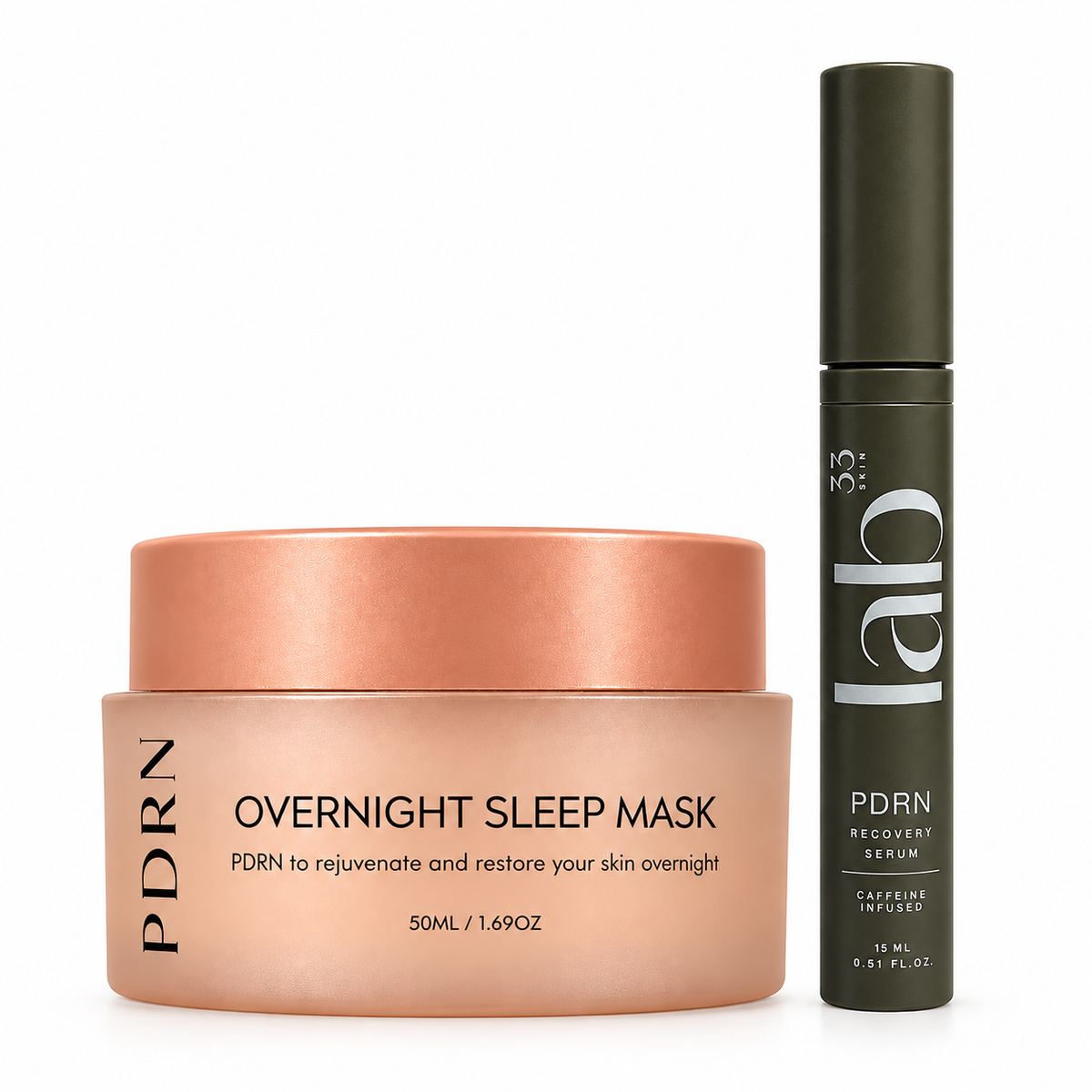
LAB33 is skincare, not an injectable. We built Collection 0.1 around PDRN, sourced from salmon, alongside ingredients with a long track record:
- The PDRN Recovery Serum pairs PDRN with a 10-peptide complex, 2% niacinamide, adenosine and caffeine, applied every morning and evening with a cooling steel applicator.
- The PDRN Overnight Sleep Mask pairs PDRN with a concentrated humectant complex and panthenol, used two nights a week.
Together they make The PDRN Recovery Ritual. New to the ingredient? Start with our guide: What is PDRN?
Frequently asked questions
Is PDRN the same as polynucleotides?
No. They are closely related, as both are made of DNA fragments, but polynucleotides are longer chains. They are often grouped together because they are used for similar reasons.
Can a PDRN serum replace polynucleotide injections?
No. Topical skincare and injectable treatments work in different ways. A PDRN serum is part of your daily routine, not a substitute for a clinic treatment.
Are polynucleotides and PDRN vegan?
Usually not. Both are most commonly sourced from salmon. LAB33 PDRN is sourced from salmon, so our formulas are not vegan.
Can I use PDRN skincare after a polynucleotide treatment?
Ask your practitioner. They will tell you when it is safe to return to your usual skincare after a treatment.
This article is for general information and is not medical advice.